Synthetic Dreams
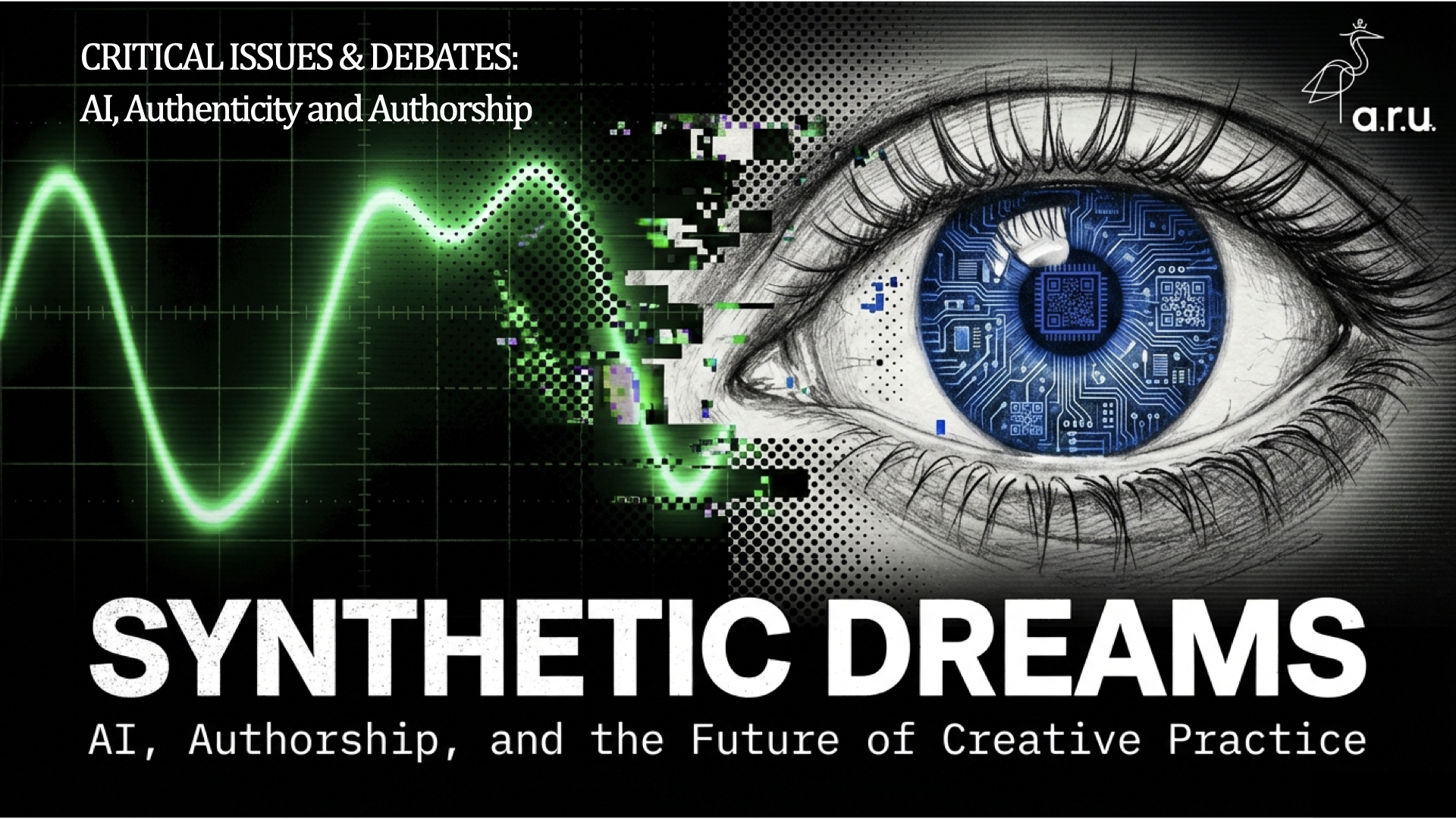
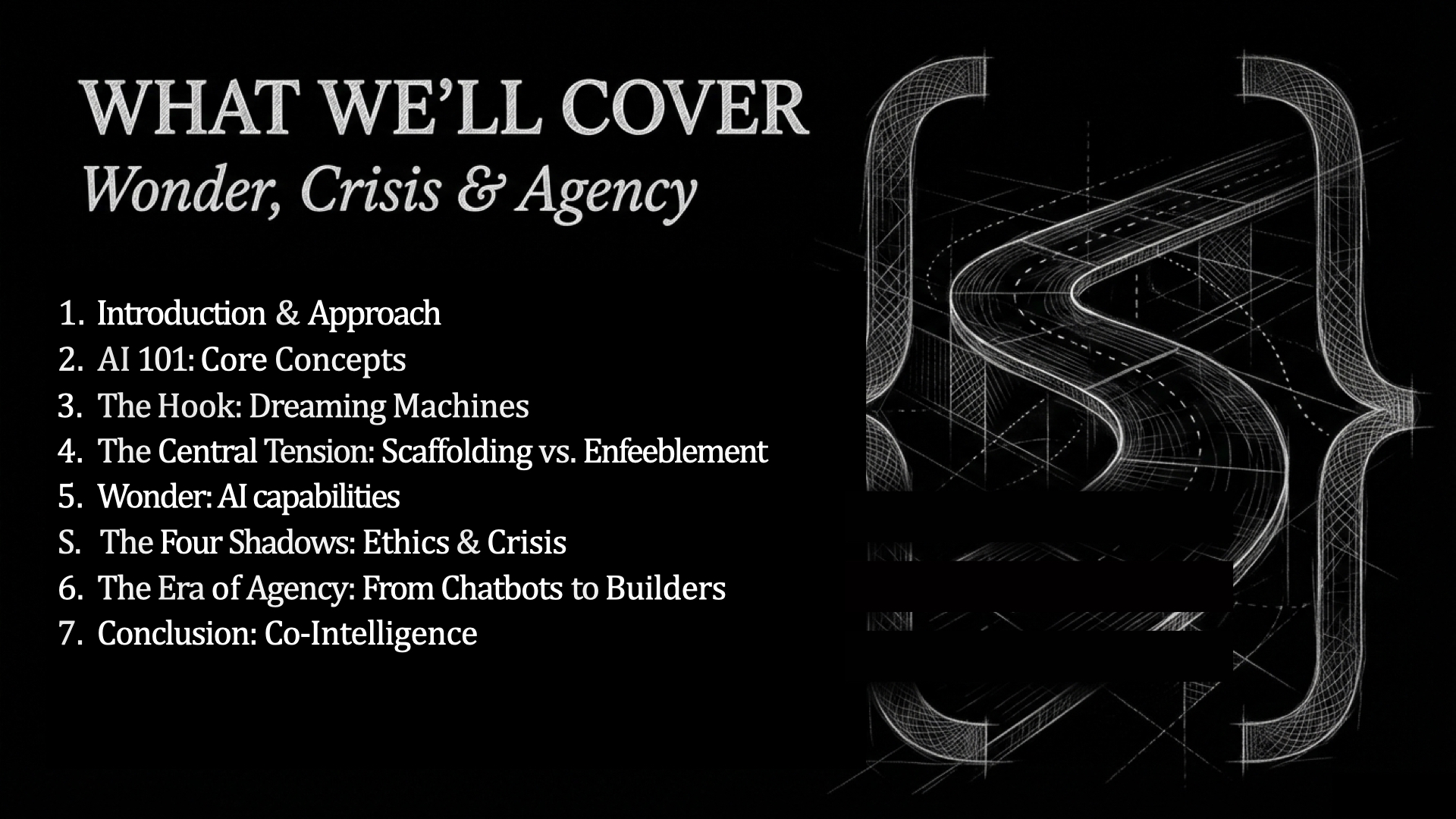
Wonder → Crisis → Agency
The lecture is structured around three movements. It opens with wonder — "we are the first generation to share the planet with dreaming machines" — progressing through the creative capabilities of text, image, audio and video generation. It moves into crisis — copyright, bias, labour displacement, the question of aesthetic value. And it closes with agency — the rise of AI agents, vibe coding, and the argument that the creative must hold the vision.
Clark and Chalmers' Extended Mind Thesis provides the central tension throughout: are these tools scaffolding that extends our creative capabilities, or do they risk enfeeblement?
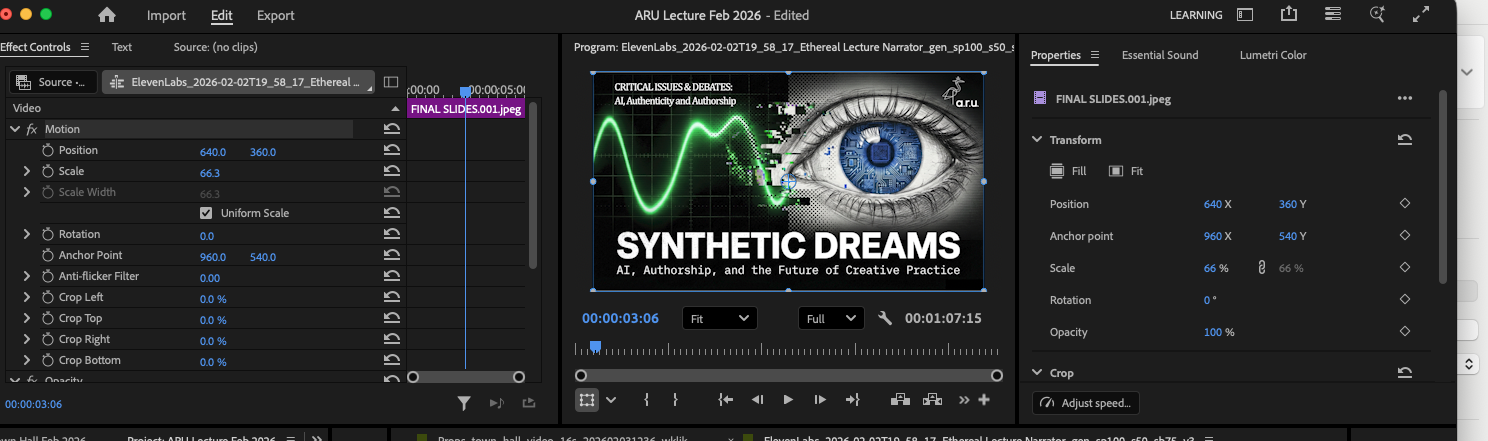
The Production
The lecture was designed so that students experience AI while learning about it. Four distinct voices run through the recording:
Real voice — my own narration for personal reflections, framing, and the introduction and conclusion.
Cloned voice — an ElevenLabs clone of my voice, used for sections requiring consistent delivery while freeing up production time.
SAGE — an AI co-teacher persona handling the historical timeline and technical explanations.
Video avatar — a generated avatar for a specific section, demonstrating the uncanny valley in real time.
The shifts between voices are themselves part of the lesson. Students don't always know which voice is real — and that ambiguity mirrors the themes the lecture is exploring.
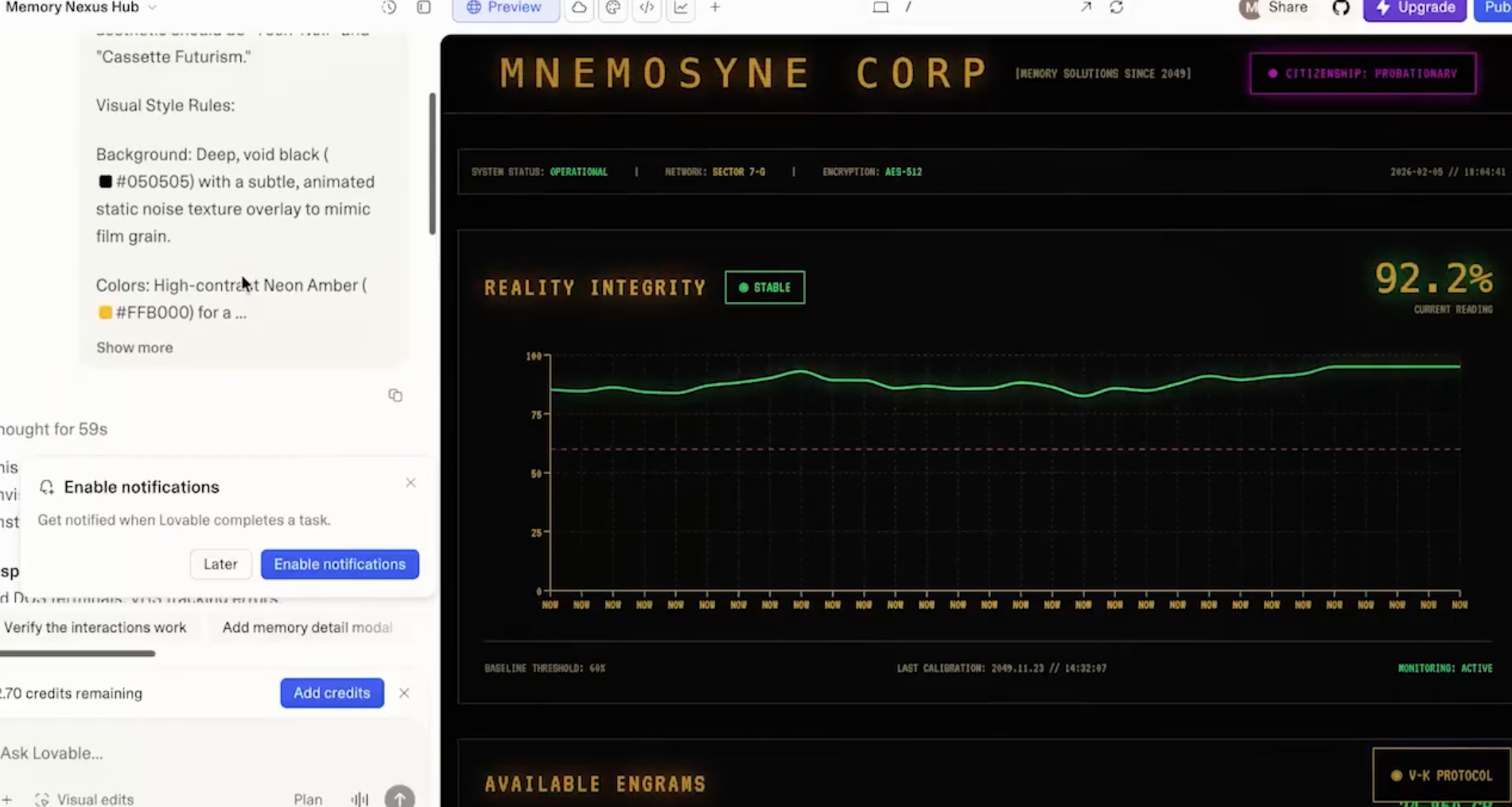
AI-generated visuals illustrate concepts throughout, and a vibe-coded interactive element was built for the agents and coding section.
Reflections
The medium is the message
A lecture about AI that's built with AI tools demonstrates capability and limitation simultaneously. Students can hear the difference between real and synthetic voice. They can see where generated imagery succeeds and where it falls short. That direct experience teaches more than any slide of bullet points.
AI is interdisciplinary by nature
The lecture treated AI as a technical, creative, cultural, economic and existential consideration — and every discipline in the Art School found their entry point. What resonated with fine artists was different from what resonated with filmmakers, but the framework held across all of them.
The creative holds the vision
This is the thread running through the entire lecture. The machines dream, but they dream of nothing. Their hallucinations have no purpose until a human gives them one. Slop is what happens when there's no vision. Art is what happens when there is.