Escaping the Dopaminferno

Escaping the Dopaminferno
Digital Declutter and Dopamine Detox
By Matt Gwyther and Neal Taylor
Part I — Let's Begin
Foreword
Before we begin we would just like to say that we have been thinking about, sorry -
Inbox – 2 messages
About a lot of things, about distraction and
Update inbox check
And mind you there is a lot of stuff going on
Homepage has updated
in the world, important, you know.
You might have new messages.
Click beep confirm update, updating
Reinstall now
New tab, breaking bad news, and whilst you are here
You might be interested in these stories
Scroll down. Top rated? Comment here now!
Please fill in your details,
Thank you we will be in touch soon.
Inbox confirm
Half price shoes, cars, mobiles, headphones, viagra, luxury flights!
Hey, have you logged in recently?
You've got replies!
Thanks for the update, look what your friends are doing ...
Say hello. Oh, hello! Whilst you are here
Other shoppers bought this and clicked here.
Thank you for your purchase. Share this update.
We will be in touch shortly. Homepage has updated.
But before you go, we thought you might like something -
Check out these never seen before
Half price inbox beep buy now one click two secs love
New tab, full screen, low volume.
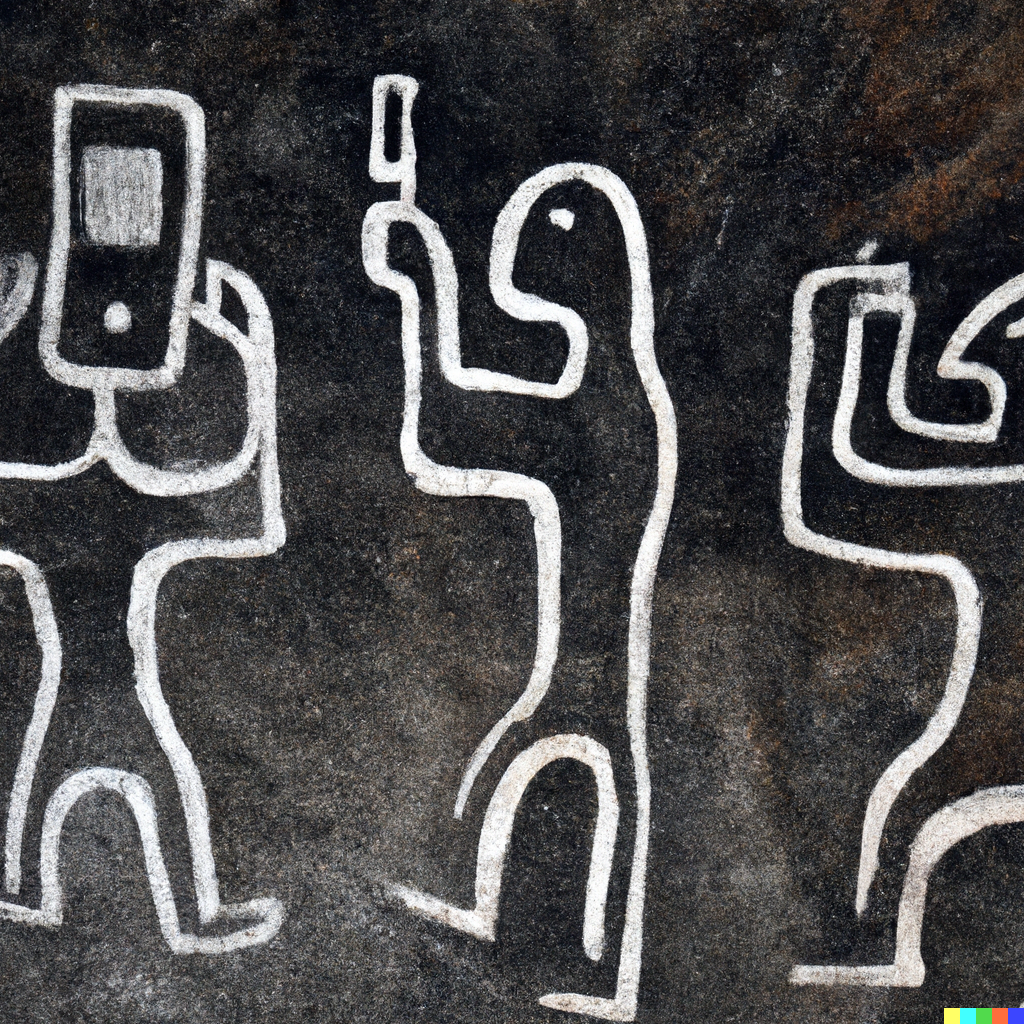
Our Intentions with This Book
In a nutshell these are our intentions:
- You can get all the core information within about 90 mins of reading this book.
- The reading experience should be enjoyable, thought-provoking and enlightening.
- You should find opportunities to reflect on your own relationship with technology and consider doing something about that relationship, especially if the technology isn’t bringing you closer to a happier and more fulfilling life.
- You should try out some principles or even create your own.
- You will feel motivated to share this with a friend and try it together, like we did.
- You will feel encouraged to share your stories and experiences with us. What works for you? What didn't work? We would like to hear from you and we will respond!
What are we aiming for with the Digital detox?
Transcending the forces that pull us away from meaningful pursuits.
Is There Such a Thing as a Dopamine Detox?
A word of caution
Dopamine is a neurotransmitter that plays a key role in the reward systems of our brain. In relation to addiction it is associated with the anticipation of reward, rather than reward itself.
Technically, when embarking on a digital declutter, we are not detoxing from dopamine, at least not directly. Instead, we are aiming to reduce and better control the multitude of experiences that cause spikes and chronic changes in dopamine release. Nobody is consuming dopamine directly; nor are they addicted to dopamine. Rather the substances or behaviours associated with the release of dopamine can lead to addictive behaviour.
Although the role of dopamine in our brain's reward system is well established, the term 'dopamine' itself is often used as a buzz word.
Throughout this book we will make reference to the neuroscience of dopamine and addiction, but our primary goal is to share with you the most relevant information that we think you will need in order to reflect on your relationship with technology. And we will offer practical suggestions and principles (that we have experimented with) to help you on your journey.
For a deep dive into neurological underpinnings of dopamine and addiction please see the recommended sources at the end of this book.
Confrontation
Confrontation
"The rabbit-hole went straight on like a tunnel for some way, and then dipped suddenly down, so suddenly that Alice had not a moment to think about stopping herself before she found herself falling down what seemed to be a very deep well."
Alice in Wonderland by Lewis Caroll
Our patterns of behaviour and substance use are often deeply interwoven into the fabric of our personal, group and cultural identities. Assessing our relationship with digital technologies and confronting our addictions head on is no easy feat!
The experience of taking on something like a digital declutter or dopamine detox can force us to look inwards - a fundamental confrontation with our selves!
Unravelling our behaviours and looking inwards forces us to inspect our anxieties and ask deep questions about our lives. Here we urge a curious mind and kindness with ourselves.
In order to get there we need to peel away the layers of the onion. We should not expect immediate results; nor should we expect the journey to be straightforward or to follow the patterns laid out in the experience of others. The journey should be rewarding, but this confrontation could be quite painful.
We hope that this book will provide some solace in this confrontation should you choose to embark on a similar journey to ours.
You are not alone in this journey and the more we find spaces and communities to discuss these topics the closer we may get to the core of the onion and find ourselves living meaningful lives aligned with our core values.
Part II — Understanding
The Insidious Re-wiring of the Brain by Tech Companies
Changing tech, changing minds
Our lives in the Digital Era are saturated by tech. Our usage of tech, together with the rapid pace of new developments in tech, instill us with a feeling that our existence in the modern era is rapidly speeding up. As has been the case throughout human history, we are changing tech and tech is changing us. This rolling symbiosis may be at the very core of what makes us human.
What does it mean to be human in the modern era?
As Andy Clark suggests in Natural-Born Cyborgs, the combination of the technologies we use and our brain’s inherent plasticity mean our human experience is extended – we think and feel differently because of technologies; in fact, in some sense we think through these technologies. This concept is not new. Even in the last century Marshall McLuhan argued that technologies were an extension of the human function. The book was an extension of the eye; the telephone an extension of the ear.
As digital technologies become more and more refined, more closely adapted to our biology, more interconnected, it will become increasingly difficult to draw the line between where we, as humans, begin and where we end.
Technologies using virtual and augmented realities will challenge this distinction further than we thought possible.
Rewiring our brains
The sensory cortical homunculus (image below) illustrates how much space different parts of our body represent in our brain’s neurological ‘map’ of sensory regions. There is more space dedicated to sensations from our hands, so this area is depicted as larger, relative to areas such as our body’s trunk that takes up less space. I have overlaid some common tech devices to illustrate my observation that our brain re-maps and re-wires in a constant exchange with the digital technologies we use. This ‘Digital Homunculus’ can perhaps help us think through questions such as: how might objects such as smartphones, that are so seamlessly integrated into our actions and sensations, be neurologically mapped?
How much of our consciousness is being taken up exclusively now by these interactive devices?
If these technologies are fundamentally part of us, then does damage or theft to them count as injury to self as well as to property? How much of our selves do we lose if a social media account is blocked or cancelled?
As we share the experiences of our digital detox, we hear stories of mothers who are giving birth refusing to let go of their phone; of teenagers born in the smartphone era who, when deprived of their devices, become unwell; as well as many accounts of the common phenomena of phantom phone vibrations and ringing noises. Each story reinforces what we all feel: an ever-closer union between ourselves and our technologies.
The human experience is increasingly 'bio-augmented'.
What are tech companies up to?
The role of tech companies in driving this ever closer union between ourselves and our digital devices is clear, and there are compelling reasons for this drive, perhaps the most common being the reduction of barriers to faster communications and enhancing our abilities to connect with peers around the world.
But what about the longer term impact that tech companies have on us - biologically or psychologically?
The first widely-used telecommunication network was devised in France in the late 18th century, using a series of telegraph towers, paddles and codebooks to transmit information at speeds 10 times that of a galloping horse!
The intentions of telecommunications in the 18th century were clear. But can we say the same for our age? With the pace of technological advance comes a need for reflection.
"A GPS device on your phone is designed to get you where you need to go, and it does that. It was not designed to weaken your sense of direction and make you dependent upon it to feel safe in urban or rural areas. Yet it also does that."
Daniel Schmachtenberger
We can now see in real time the reactions (good, bad & ugly) to what we post on social media; our thoughts, image and identity are suspended in a technical ether. They form a barrier between our selves (including our inner world of thoughts and imagination) as individuals and the rest of the world representing the new frontier of progress for tech companies.
The skill sets of engineers who are employed to solve technical problems around communications are shifting. The building blocks of innovation have shifted from bricks, mortar and physical tools to code and information dynamics. Now, the skill sets include those of the neuroscientist, data scientist and machine learning expert. But what are the intentions of the current tech companies as opposed to the longer term impact on biological humans?
An uneven arms race in the information world
The role of these engineers and their skill sets is of particular relevance for us on this journey to using technology with intentionality (rather than being used by technology and technology companies).
In order for us to maintain our biological human sovereignty and use technology with intentionality, we need to better understand our relationship with digital technologies and to unpick the dopaminergic pull of technology and how this affects us.
Technologies are being built and designed to appeal to us in more and more precise ways. Algorithms provide suggestions to us based on our behaviour (and the usage of those like us). Features like the endless scroll draw on our propensity for novelty and the desire to find out more. Precisely timed notifications - built on intermittent reinforcement schedules - remind us of our need for food, companionship and connection. 'Like' buttons draw on our need for social acceptance. Vivid colour schemes catch our eye and draw our attention from the subtler, natural beauty of the world around us.
As has been revealed in court testimonies by former tech employees, tech companies have been hacking human weaknesses in order to gain more attention. Why? People only have so much attention during the day, but tech companies somehow needed to get more attention time (to sell onto eager advertisers), and this extra time was only achieved through hacking basic human needs and hacking the brain's limbic system.
Intermission!
You're doing a great job, but if it's all getting a bit too much, just load up our dedicated radio zone - bringing you some cool vibes from a different time!
The level of understanding in the general public of the dopamine system and addiction is far behind those in the tech industry. We find ourselves in an uneven arms race - perhaps the only way to fight back is through arming ourselves with greater understanding.
Information is that which changes us - literally in-forms us. This is our attempt at using information to change ourselves for the better.
"Watch your thoughts. They become words. Watch your words. They become actions. Watch your actions. They become habits. Watch your habits. They become character. Watch your character. It becomes your destiny."
Loatzu
Let's continue our journey and find out more about dopamine and how that affects us- when using technology.
Addiction and Dopamine
Addiction in the digital world
"Every age has its signature afflictions"
Byung-Chul Han
Like many, I have direct experience of being addicted to various behaviours and substances and know many others afflicted by this common condition.
It is impossible to begin to understand addiction without acknowledging the influences upon the individual or group from society and the wider environment to which they belong. Any dialogue about addiction must draw from fields including psychology, neuroscience, sociology, and anthropology.
The past years (the beginning of the twenty-twenties) have led many to feel trapped and overwhelmed. To varying degrees people have been separated from loved ones and disconnected from the world. Patterns and cycles of news have permeated our lives and how we think about the world. I have found myself losing a degree of meta-awareness around tech use, i.e., my ability to step back and look at patterns of how I use technology have eroded. A quick refresh of news apps, social media and snippets of podcasts and YouTube videos have wriggled their way into those numerous snatches of unoccupied time: between meetings at work, going to the bathroom, taking a tea break.
On some level the prevailing situation is to blame for fuelling anxiety, fear and stress. Perhaps then technology is merely a salve: a way to treat the unpleasant consequences of facing reality head on? What horrors would we have to face in the absence of distraction?
As mentioned previously, withdrawal and cravings can be understood as the pain associated with the compensatory dip in dopamine and our actions in the direction of the addictive substances to relieve this pain.
In fact, addiction is often seen as the seeking out of pleasure to escape pain or suffering.
Self-medicating
Like the mercenary, Shantaram, scared to death and on the run, travelling to dangerous zones to give himself the momentary thill to achieve respite from his underlying anxiety, how many of us, instead of confronting our anxieties, are travelling into a digital market square to be emotionally outraged (a place of humour, shame and horror), a digital wonderland for unlimited distraction, or digital harem for pure unadulterated pleasure on tap.
How many of us have self-medicated ourselves with shocks, thrills, pleasure, outrage or even numbness, all at an instant tap of a thumb?
The Effects of Dopamine — Why We Want More
Dopamine and technology
During the excellent Huberman Lab podcast (episode #33) in a wonderful deep dive into the nature and mechanism of addiction, Dr Anna Lembke suggests:
“The first message I would want to get across about social media is that it really is a drug. And it’s engineered to be a drug.”
When our relationship with digital technology becomes addictive, the dopaminergic system is triggered. Dopamine is associated with both reward and movement and has entered common parlance as a buzzword, i.e. ‘I am going on a dopamine detox’, ‘dopamine fasting’, ‘hacking the dopamine system’.
Everyone's baseline levels of dopamine are different and depend on complex gene-environment interactions. The body naturally tries to maintain the stability of dopamine levels (homeostatic regulation).
A tip to one side, i.e., a movement in the direction of pleasure, will result in an equal and opposite tip in the other direction – towards pain. Lembke explains how pain and pleasure are co-located and how this uneasy balance can help to explain the nature of addiction.
Withdrawal and cravings can be understood as the pain associated with the dip in dopamine and our actions in the direction of the addictive substances and behaviours to relieve this pain. In fact, addiction is often seen as the seeking out of pleasure to escape pain or suffering.
Chronic exposure to pleasure can lower our dopamine baseline through our brain’s downregulation of dopamine to compensate for such high levels. This can lead to anhedonia, the inability to experience pleasure. A key takeaway here is that we need to think about dopamine oscillations and spikes as well as baseline levels.
Dopamine, stress and anxiety
Returning to a section on dopamine in Robert Sapolsky’s momentous book, 'Behave: The Biology of Humans at Our Best and Worst', we're struck by the parallels with how chronic stress and anxiety deplete dopamine levels (and dopaminergic system functioning), leading to problems with motivation and anhedonia. Taken together could the following principles go some way to explain why we embarked on this digital detox: (1) downregulation through too much pleasure and (2) depletion due to chronic stress?
As was the case for many, my stress and anxiety levels were massively elevated during stages of the pandemic and now during the Ukraine conflict. Simultaneously, my screen time is up; I’m working from home a lot more, moving screen-to-screen between work and leisure. Often, it feels as though I’m either attempting to distract myself from the stress of the situation or actively tumbling through cycles of news and content as though the stress is propelling me through the technological ether. Knowing how digital tech companies are harnessing the power of reward and reward anticipation when designing their services, I can’t help but reflect on this self-propagating system:
Until we had embarked on a detox, we had never really become aware of the bio-feedback loop to associate the post-dopaminergic low with the technological behaviour that induced the dopamine spike.
So, what can be done? Echoing the recommended period for ‘Digital declutter’ in Digital Minimalism, Lembke goes into detail about the importance of a 30-day abstinence period to reset our relationship with a substance or behaviour. The 30-day period is a benchmark for how long our brain usually needs to reset the dopamine system and break addictive cycles. More to come on this in part 3 'Take Control!'
Addictions and Bad Habits Are Decoupled from Reality
Habits Can Be Decoupled from Long-Term Consequences
Some newer perspectives on addiction propose that addiction is a type of habit which is disconnected from the reality of its long-term consequences.
Let’s break that down.
We are talking about habits, but specifically about bad habits instead of good ones!
Humans have all sorts of habits, and it’s part of what makes us human. Most of these habits help us as a commitment to the pursuit of our goals and motives, whether in the pursuit of love, reproduction, nurturing, or legacy.
But when looked at from a long-term perspective, some habits are detrimental to our health or the well-being of ourselves and others. These can only be described as bad habits.
We even know many habits are bad, but the long-term impact is being overridden by some short-term circuitry.
How Does This Come About?
The Brain’s Predictive Machinery Drives These Habits
According to the esteemed neuroscientist Karl Friston, the brain is essentially in the business of creating predictions of the world and aiming to minimise surprise (or uncertainty).
Without going into too much detail, something that is surprising is usually bad news, so we want to avoid surprise. A surprise is typically something that we didn’t expect in our model of the world.
We take concerted steps to minimise this surprise, and we know we’re on the right path when we have the feeling that uncertainty is being reduced, doing better than expected. Essentially, a pathway towards a goal of reduced uncertainty will feel good. Conversely, if we have an intention and we are moving in the right direction, that should feel good.
Continuing on from the work of Friston, Mark Miller and colleagues propose that this feedback loop can become disconnected from reality.
For example, taking a drug can feel good, but it’s the pathway towards taking the substance that can become habitual.
Someone may want a particular sensation (excitement, calmness, invigoration), go through some steps, and achieve that sensation. Result? The feeling of uncertainty is reduced because the person actually achieved what they wanted.
The act of working towards an intention which results in the expected outcome (the altered state of excitement or invigoration) feels good—or feels as though uncertainty has been reduced.
Uncertainty wasn’t reduced, but the sensation gave us that impression. A sort of glitch.
But why? Upon reaching this state, it was not a ‘surprise’, it was not ‘unexpected’. It was something that was expected and achieved. Boom—release of neurochemicals that tell the brain: that was good.
Therefore, one of our primary functions, which is to reduce uncertainty, was achieved. And the brain concludes: do it again! Because the feedback loop feels like a positive one, it’s possible for a habit to form. Instead of feeling anxiety, moving successfully towards a predictable altered state will become a choice that, when faced with uncertainty, comes quickly to mind again and again.
Here we have another clue: the narrowing of choices. Instead of many different creative and physical pursuits which give us a ‘natural high’ (but may require extra effort!), the habits are closing off other options. We’re narrowing the choices of how to reduce our feeling of uncertainty. And because the detrimental effects tend to be longer-term, they’re often invisible in the feedback loop—thus disconnected from reality.
Technology or Substances Provide Easy, Short-Term Gains
In the context of technology and online usage, the online world offers a predictable mini-world. This online world is easy to access (at the touch of a fingertip), a contained and predictable world that provides an altered state of mind: awe, shock, delight, surprise. Incidentally, most of the reactions on social media tend to be related to these emotions.
In the pursuit of these altered states, it becomes a quick go-to, which discounts so many other options and so many other pursuits. A habit, in the face of feelings of uncertainty.
But it’s an illusion—delusional even. This mini-world comes at a cost. As mentioned before, we haven’t developed the feedback loop to connect our behaviours with the long-term health impacts to ourselves and our society. It also comes at a cost in terms of missed pursuits in other domains.
Breaking the cycle
The way out of this situation may require a shock realisation of the long-term effects of these bad habits, an intentional widening of the alternative options available, and some deliberate roadblocks in the way of this easy pathway.
Are you ready to do something about it?
Let's escape the dopaminferno!
How bad is it? What can we do?
Are We Bio-Augmented?
As the month unfolded, I found myself reflecting on more radical aspects of our relationship with digital technologies. Our lives in the Digital Era are saturated by tech use. Our usage, alongside the rapid pace of new developments, appears to catalyse the pace of our existence in the modern era. As has been the case throughout human history, we are changing tech and tech is changing us. This rolling symbiosis may be at the very core of what makes us human. As Andy Clark suggests in Natural-Born Cyborgs, the combination of the technologies we use and our brain's inherent plasticity mean our minds are extended - we think and feel differently because of technologies, in fact in some sense we think through these technologies.
As digital technologies become more and more refined, more closely adapted to our biology, it will become increasingly difficult to draw the line between where we begin and end. Technologies using virtual and augmented realities will challenge this distinction further than we thought possible. For more on this please see my website.
The sensory cortical homunculus (image below) illustrates how much space different parts of our body represents in our brain's neurological 'map' of sensory regions. There is more space dedicated to sensations from our hands, so this area is depicted as larger, relative to areas such as our body's trunk that takes up less space. I have naively overlaid some common tech devices to illustrate my observation that our brain re-maps and re-wires in a constant exchange with the digital technologies we use. This 'Digital Homunculus' can perhaps help us think through questions such as: how might objects such as smartphones that are so seamlessly integrated into our actions and sensations be neurologically mapped? If these technologies are fundamentally part of us, then does damage or theft to them count as injury to self as well as to property? How much of our selves do we lose if our Facebook account is blocked?
Illustration from Anatomy & Physiology, Connexions Web site. http://cnx.org/content/col11496/1.6
As I share the experiences from my digital detox, I hear stories of mothers giving birth, refusing to let go of their phone - the dual comforts of a partners hand and our other omnipresent companion. Of teenagers born in the smartphone era who when deprived of their devices become unwell. As well as many accounts of the common phenomena of phantom phone vibrations and ringing noises. Each story reinforces what we all feel: an ever-closer union between our selves and our technologies - we are increasingly bio-augmented.
As each generation looks forward, the contours of a brave new world have the power to both excite and unnerve. I sit on the uneasy frontier remaining agnostic as to the shape of what unfolds and the range of ethical implications. Two constants are likely to be (1) the rolling progress of technology and (2) our brain's near infinite ability to adapt. Beyond this, we should be extremely cautious of bad incentives and the race for our attention pushing technologies in directions that may result in maladaptation and erode our sense of free will. Perhaps, as per the principle informed approach to digital detox, there are values that we want to hold onto through the maelstrom of progress that mal-aligned incentives may disrupt.
Distraction
Regardless of what you're doing you need to set clear boundaries.
"A study by Strayer & Watson of the University of Utah suggested only 2% of the population can multitask successfully (2010). Everyone else is going through the toll lane and paying the costs of context switching."
For most people, the clear boundaries also need to be set for themselves!
A Natural Distraction and a Natural Disaster
Distraction is natural
Throughout the day we are subjected to potentially endless distractions.
Being distracted is actually normal. Complete focus isn't even achievable. The trouble is that there are vested interests in deliberately distracting us.
As Dr Amishi Jha, in 'Peak Mind', relates in study after study, "there were zero circumstances in which participants maintained their focus 100 percent of the time." There's also a natural explanation. Distraction is an evolutionary development for survival. A mind that was completely focussed was at high risk of being attacked by silent and oncoming prey. A mind that could toggle in and out of attention is one that survives, since it is more likely to coincidentally see dangers (and also opportunities).
So we have a brain that's susceptible to distraction and naturally inclined to wander. As Dr Jha says, our attention is powerful, trainable but also fragile.
The trouble appears to be that there are vested interests in capturing our attention for ulterior motives (often profiting from selling your attention). Tech companies are using algorithms to gain 'limbic system hijack' - via the most emotive and evocative stimuli - salient for immediate attention.
Limbic System Hijack!
What does this mean? The limbic system is the part of the brain involved in our behavioural and emotional responses. This emotive part of our brain (the amygdala) overrides the rational part of our brain. In such circumstances, willpower and rationality – the intention not be distracted – are not going to triumph over the attention industry's algorithms, which capture our attention with rapid distribution of evocative content.
The tech industry understands the power of distraction. Consequently, throughout the day we are having our natural inclination for distraction subjected to potentially endless amounts of evocative content, which in turn leads to unnatural levels of distraction and an increased fragility of attention.
When our limbic system is hijacked, it is more than just a distraction.
As we discovered, ‘distractions’ are the places we go to seek relief from the discomfort of confronting limitation as we will find out later in this book.
Pause for thought
- How long can you hold your attention? Try focussing on the graphic below and see what happens.
- How many lines of a book page can you read before your mind wanders?
- What are you doing when you feel most distracted?
Distraction from a Reality That Cannot Compete
Distraction from the natural world
One of the inspirations for this book is Oliver Burkeman's truly exceptional, soul-feeding volume 'Four Thousand Weeks: Embrace your limits. Change your life.' This led to reflections on the nature of attention in the digital age.
Have you ever had the experience of walking somewhere naturally beautiful and felt the pull of your phone? Not just out of curiosity, or because your phone vibrated, but because the natural world had lost its allure? Burkeman describes exactly this scenario - one that feels unsettlingly familiar - where the world feels tepid in comparison to the world inside of our rectangular devices. This is a prime example of how our natural inclination has been reconfigured to respond to technology.
Biologist Terrence McKenna once relates a story about his experience of living in the remotest jungle for weeks on end, whilst undertaking research. There was no link back to modern civilisation - just pure jungle - apart from one item: In the village chief's hut there was a cheesecake calendar. McKenna reflected how he was unable to concentrate when he was speaking to the chief because his attention kept being attracted to the cheesecake calendar. It wasn't the cakes, however, it was the vividness of the imagery of the cakes - the dopaminergic spectrum of fantastic bright colours, unlike anything else in the natural world. Consider: and that was the effect of a cheesecake calendar!
Our interaction with digital technologies is creating a new mode of attention in humans. A light-hearted interpretation would perhaps describe this phenomenon as a more fleeting, readily changeable form of attention that enables us to operate fluidly in an information rich age. A stronger, more cynical interpretation might describe this as a mode of attention that pulls us (distracts) from long-evolved forms of engagement with the natural world towards human-made artifices that have developed rapidly with the express intention of engaging our attention.
"Are we experiencing a battle between slower forms of engagement and quicker cursory modes?"
Matt Gwyther
Doing something about it
I decided to test this out. During the digital detox journey I decided to switch my phone to grayscale to tone down this competition, to let the colours of the natural world be the most vivid and compelling visual stimuli in my existence.
Although this act was perhaps a one-dimensional and paltry attempt to 'arm-up' in response to the war on attention, it did bare some fruit! Now when I switch back to colour - in my experience unavoidable if you want to look at photos or order food from delivery apps - I am confronted by the vividness of the colours on my phone. They feel 'unreal', coarse and overpowering. The break from the sickly, dopamine-saturated colour scheme of some tech wizards' psychedelic dreams enabled me to see this use of colour and light for what it is - a calculated attempt to draw attention in an unrelenting attempt to make the device more appealing than the world around.
At this stage, it's appropriate to ask ourselves some deep questions.
Questions
-
How can we ensure that stimuli in the physical world remain salient to us in the digital era?
-
How can we avoid a kind of tech-induced derealisation where the natural world is drained of beauty, and instead we look to the digital space for stimulation?
-
How can nature compete with the potential endless evocative novelty of the digital world! And why do we want that?
The real beauty
Jaron Lanier, computer scientist and tech philosopher / ethicist who coined the term 'Virtual Reality' (VR), is clear on this point. The most compelling part of engaging with VR should be in the removal of the headset prompting a realisation of the unreplicable beauty in the world around us.
"Attention is the beginning of devotion"
Mary Oliver
Technology, Anxiety, Bullshit Jobs and Meaning
Meaning and work
Take this section (whole book) with a pinch of salt and form your own conclusions! Feel free to skip this section if you’re not in the mood for some looser ramblings!
When writing the above section, doing my own fair share of procrastinating and soul-searching, I was compelled to go further into the nature of work and draw some links in a very loose fashion!
Burkeman describes numerous cases of ‘successful’ people feeling like they can never keep up with the endless stream of things to do, the feeling that there is not enough time in the day. They simply cannot relax! This inability to stop and unwind, despite knowing that it’s in our best interest, feels very much like an addiction. Perhaps it constitutes a general, societal-level addiction and compulsion to achieve and to experience, to extract as much as possible from life, #YOLO. Could this be, in part, what is driving the epidemic of burnout?
If we are compelled to move forwards (wherever that may be), at a pace that is damaging to us, and, on some level, we are aware of this, what does this say about free will? Although we feel like the principal actor in our lives, our actions betray this intuition. This feeling of agency, even if it only ever remains a feeling, may be crucial in guiding meaningful pursuits and action in life.
What happens when we pull ourselves away from this tide of activity and compulsion to move forwards, to regain some ‘free will’? People report a sense of emptiness, a great existential vacuum opening, a realisation of the futility and meaninglessness of actions. This essential confrontation is bracing, anxiety-inducing and likely to lead to further habits of compulsion and distraction, whether through digital tech usage or by any other means. Perhaps this confrontation is necessary if we can harness the energy it produces towards more meaningful ends.
Bullshit Jobs
All this links very nicely with David Graeber’s work on Bullshit Jobs and the giant crisis of meaning sitting at the centre of contemporary society. According to surveys he conducted, around a third of the working population feel their job is utterly meaningless and would not be missed if it disappeared overnight. COVID and the ‘essential workers’ realisation provided a glimmer of the wakeup call necessary to stop and reflect. But can we blame people caught up in a system of box-ticking, duck-taping and task-mastering for craving distraction from the predicament of how they spend most of their waking hours?!
"There's a Meaning Crisis at the root of our mental health crisis. It's expressed as an increasing sense of bullshit. There's a sense of drowning in this old ocean of bullshit."
John Vervaeke - Awakening from the Meaning Crises
"It’s no wonder the soul cries out. It is a direct assault on everything that makes us human."
David Graeber - Bullshit jobs
How might we slow down our experience of time? How might we refuse to participate in instrumentalised modes of existence? How might we be more pirate, more rascal and Bukowskiesque?
We hope some of the tools in this book can help here, and I would throw in one more, which is perhaps a timely remedy for the above section and its skirting of cynicism: embracing the absurd. Find humour and distance in reflecting on all of this, rather than being drawn into cynicism and withdrawal. Sit back and enjoy the ride. Look out for curious souls en route, and don’t take things too seriously.
If you want to see how seriously we've taken this and how much we've reduced the bullshit, Matt and Neal are publishing their full internet browsing history for the past few months - click here.
What Are We Running Away From?
Shantaram & underlying anxiety
In the epic story, ‘Shantaram’, Gregory David Roberts talks about the constant anxiety he experienced in his everyday life. He was, after all, Australia’s most wanted man at the time. Since Gregory was on the run, his constant anxiety was hardly surprising: it was likely that at any time he could be caught, attacked or locked up again.
After escaping prison and whilst hiding in India, he started doing jobs for a local Bombay gang, which included mercenary jobs in Angola where a civil war was raging. He explained how the even greater danger of those scenarios meant that once the intense and risky job was finished, he could experience a deep sensation of relaxation. The even greater stress had temporarily overridden the lower but chronic stress, giving him a momentary respite. Of course, it wasn’t long until the underlying anxiety returned after the spike had subsided (as we mentioned earlier in relation to dopamine spikes, a tip to one side, e.g. pleasure, will result in an equal and opposite tip to the other side). Interestingly, he said he could see that same thrill-seeking look on many of the mercenaries who were out there as well, all of them going to further extremes, looking for a way to cope with their own underlying anxieties.
What are we running away from?
Of course, this is an extreme example, but it serves as a nice metaphor. We don't need to go the extremes of entering war zones, but we're also not on the run from Interpol nor a rival gang. We do, however, regularly subject ourselves to dopaminergic spikes and rushes and we might well be on the run from something.
Under the surface, many people live a fragile existence, often indebted with a mortgage, credit card and student debt. Even in many Western countries, a large percentage of the population is only a few paychecks away from financial ruin. All of these factors can cause constant underlying worry and fear of loss, including of fundamental things like shelter, sustenance and security. Many people’s income source, whilst ostensibly secure (as in monthly), may actually be quite fickle when viewed at a macro economic level: again, adding to an underlying fear of losing one's livelihood.
Furthermore, most messages that people receive throughout the working day are probably not messages of support, gratitude or congratulation either. Most likely it’s something that somebody wants from you quickly or something that should’ve been done but hasn’t. Each message brings an increasing addition of stress which is overlayed on top of an ambient discontent.
As we continued on our journey of understanding dopamine, tech usage and addiction, it meant confronting our coping mechanisms in the face of stress and anxiety - and it meant confronting where stress and anxiety are originating. We had no other option but to peel away the layers of the onion till we began to confront these deep questions.
Questions
- Are these spikes that we experience from social media a coping mechanism to cope with underlying anxiety?
- When do you feel anxious?
- Do you use any technologies when feeling anxious?
- How does it make you feel afterwards?
A digitally induced 'learned helplessness'
Incidentally, many of these 'coping mechanisms' are adding even more fears into the slow burning embers of anxiety. The sheer amount of information available through digital channels means that people are becoming 'hyperaware' of their susceptibility and fragility, but also acutely aware that these factors are outside of their control. As Michele Wucker writes in 'You are What you Risk', people - particularly millennials - are worrying about things they cannot control rather than things they can do something about it.
So in many circumstances, whilst we're distracting ourselves (either deliberately or unwittingly) into digital escapism to seek momentary respites, the result is sometimes that we're not only adding to the underlying stress, but also inadvertently adding to the feeling of helplessness.
As we continue with this journey, it's worth reminding ourselves of the aspects of life that we can act upon or influence, especially together with our network of friends, family and the communities we align to. This is the stuff that exists!
Likewise, we found that it's worth continuing to understand our own behaviours, especially in response to our anxieties, so that, if anything, we have the space and capacity to reignite our natural propensity to act upon the things we can change.
Underlying Anxiety
The importance of anxiety
As we progressed further on our journey into understanding the mechanics of addiction and the dopamine system, we kept finding ourselves returning to the subject of anxiety. Understanding anxiety was key to both (a) integrating our experience during our digital declutter and (b) understanding addiction at a deeper level.
What is anxiety and how does it relate to addiction and digital tech?
Many of us know what it feels like to experience anxiety, either in fleeting moments or in a more persistent form. A common definition of anxiety is “a feeling of worry, nervousness, or unease, typically about an imminent event or something with an uncertain outcome.” It is estimated that around 5% of the world suffers from an anxiety disorder of some type, and the prevalence is likely to be a lot higher now because of the COVID-19 pandemic. Common symptoms of anxiety include the inability to concentrate or relax, a constant feeling of being on edge and trouble with energy levels and sleeping.
Could it be that anxiety is both behind our tendency towards addictive habits around digital tech and that tech is worsening our anxiety? Is this another vicious cycle, one that could perpetuate into the future and explain why some have claimed that we live in an age where the typical feeling is one of a constant background of dis-ease and tension?
It is common to hear people speak about existing in a state where they cannot relax and are propelled from one stimulus to the next. Digital Tech is one of many factors here, but one worth exploring.
Anxiety as a habit of thought and driver of habits!
Judson Brewer’s book ‘Unwinding Anxiety’ is a compelling and practical book to help understand anxiety and how it propels many of our habitual behaviours. The idea that anxiety can both be a habit of thought and a feeling that drives addiction was particularly useful during our digital detox journey. Take the following two examples that illustrate the notion of habit loops in the context of digital tech use (trigger > behaviour > reward/outcome):
- Trigger: feeling bored or anxious >
Behaviour: check phone notifications >
Reward/Outcome: temporary distraction from the feeling of boredom and anxiety - Trigger: post something on social media >
Behaviour: worry about social judgement >
Reward/Outcome: feeling anxious
Here we see anxiety as both a trigger and a reward/outcome in relation to using digital technologies.
Anxiety as trigger
Looking first at anxiety as a trigger for engaging in habits, it’s perhaps not surprising to think of anxiety (usually considered an unpleasant feeling state) as leading to some form of avoidance behaviour or distraction. What happens if we don’t pick up our phone or find some other form of distraction? Does anxiety persist? What does it feel like to sit with anxiety anyway?
Anxiety as outcome
Here there’s something crucial to reflect on - the habitual use of digital tech (or any other behaviour or substance for that matter) may, in part, be driven by avoidance of inner states. We almost always pick distraction rather than confrontation in these circumstances, but perhaps there is something crucial in confrontation, something we resist in our hyper-saturated, distraction-full lives. The pace of existence propels us through an ether of endless notifications and wider societal obligations. Is there even time to stop and take note? Even holidays become an opportunity to document bucket-list experiences online. Or even better still, 'get ahead'.
"Here we see anxiety as both a trigger and a reward/outcome in relation to using digital technologies."
Matt Gwyther
A notification upon logging into LinkedIn. A delightful mix of notifications, war, self-doubt and social hierarchy to welcome you on a Monday morning.
Avoiding confrontation
When discussing procrastination, Oliver Burkeman picks up on these notions in ‘Four Thousand Weeks: Embrace your limits. Change your life’. We understand procrastination as a common place and relatively benign form of avoidance - we don’t want to complete the essay that’s due in class or fill out the report that’s due at work. It’s appealing to avoid this obligation, distract ourselves and procrastinate. He goes on to describe a deeper, existential reading, which is something like: procrastination is a way to avoid the most pressing and pertinent concerns we have in our lives. Questions like are we good enough? is how we’re spending time worthwhile? Here procrastination is not just a simple avoidance of doing something unpleasant or difficult, it’s an avoidance of these same difficult inner states and reflections on existence itself.
Digital technologies may provide the ultimate form of distraction and procrastination; instantly available, endlessly novel, and perfectly designed to hook our attention (and the dopamine system). Again we are prompted to ask some key questions:
- To what extent are we using digital technologies to paste over our insecurities and anxieties?
- Are we avoiding asking ourselves difficult questions about how we spend our time?
- How often do you finish scrolling on social media and feel it was a good use of your time?
Here’s the crux: with endlessly available novelty and stimulation from tech, how often do we look inwards? It’s not just that we avoid thinking about what we truly value because it’s difficult. This has always been the case. Our argument is that the space for reflection is itself being eroded and hijacked.
Another great quote that Burkeman brought to our attention:
"Haste is universal because everyone is in flight from himself."
Nietzsche
Time to reflect
- What are your habit loops in relation to digital technologies?
- What habit loops drive you to pick up your phone?
- Does anxiety trigger the use of certain digital technologies for you?
- How do you feel after spending time engaging in these technologies? Do you ever feel more anxious?
Techniques to cope with habit loops and anxiety
Here Brewer’s book ‘Unwinding Anxiety’ holds many of the clues, a few of which we will summarise here:
-
Map out your own habit loops. Use the Trigger > Behaviour > Reward / Outcome model
-
Inspect and unpick the habit loops and try to insert something more rewarding into the loop, e.g.
Trigger: feel bored or anxious >
Behaviour: check phone notifications >
Reward/Outcome: temporary distraction from feeling -
Once you have mapped out this pattern and found some space for reflection, you are more likely to notice the pattern in action. At this point catch both the trigger (anxiety) and respond (behaviour) with Curiosity & Kindness, then see what the reward / outcome is!
Curiosity & kindness
Curiosity and Kindness are in Brewer’s words ‘Bigger Better Offers’ - they are more rewarding and can help to break negative patterns. Emotions associated with habit loops often feel constrained and closed, whereas Curiosity and Kindness represent an opening up.
When we are stuck in habit loops, we are not open to growth; whereas when we feel curiosity, we are primed for growth, a phenomena Brewer backs up with research evidence showing curiosity boosting dopamine levels and increasing the link between the reward-based system and hippocampus. This can be described as curiosity improved learning!
Loving kindness seems to decrease activity in the self-judgement habit loop areas of the brain.
Brewer describes his variation of the RAIN practice (Recognise, Accept, Investigate and Note) as an approach to dealing with inner states and breaking habit loops, i.e. rather than avoiding feelings and moving to distractions and habit loops, run through this process instead. Recognise anxiety, accept it, investigate how it manifests in mind and body and note what is happening moment-to-moment
I prefer Tara Brach’s version of RAIN, which she described at length in ‘Radical Compassion’. The main difference is that the final step is termed ‘Nurture’ (instead of Brewer's 'Note'). Nuturing is about offering loving kindness to ourselves and speaking to our inner child. Brach’s book is endlessly nourishing for those taken by this approach and links in nicely with the work on addiction.
“Between the stimulus and the response there is a space, and in that space is your power and your freedom.”
Tara Brach
Part III — Action
Why a Detox and Declutter?
Digital declutter
Cal Newport’s Digital Minimism lays out a comprehensive philosophy about digital technology consumption, in large part driven by the observation that:
“We added new technologies to the periphery of our experience for minor reasons, then woke one morning to discover that they had colonized the core of our daily life.“
Cal Newport
This sense of having lost control over the technologies we use and the idea that they are instead using us is a common theme and one I recognise in myself and others.
Newport makes three observations:
- Clutter is costly. We lose the benefit of each app / service when swamped with many.
- Optimisation is important. How we use tech is important. It should support something we value.
- Intentionality is satisfying. Exercising free will over how we engage with technology feels good.
This is then followed by a detailed outline of a 30-day declutter and reintegration process driven by the need to take a step back and declutter life, embrace worldly interactions and pursuits, embark on periods of solitude and move towards a relationship with technology where it serves something that you deeply value.
The 30-day period is a benchmark for how long our brain usually needs to reset the dopamine system and break addictive cycles.
There are a number of complex factors that mean this period may differ from person to person, but many years of experience point towards this being a sensible target. She explains the difficulty of the first 14 days where ‘you’ll feel worse before you feel better’, before the clouds begin to lift, and the pleasures of day-to-day life start to re-emerge.
The Call for the Declutter
Cal Newport's Digital Minimism lays out a comprehensive philosophy about digital technology consumption, in large part driven by the observation that:
Pg. 6: "We added new technologies to the periphery of our experience for minor reasons, then woke one morning to discover that they had colonized the core of our daily life."
This sense of having lost control over the technologies we use and the idea that they are instead using us is a common theme and one I recognise in myself and others. He goes on to suggest a set of core principles:
- Clutter is costly: we lose the benefit of each app / service when swamped with many
- Optimisation is important: how we use tech is important, it should support something we value
- Intentionality is satisfying: exercising free will over how we engage with technology feels good
This is then followed by a detailed outline of a 30-day declutter and reintegration process driven by the need to take a step back and declutter life, embrace worldly interactions and pursuits, embark on periods of solitude and move towards a relationship with technology where it serves something that you deeply value.
Dopamine Detox Principles
The importance of principles
The beauty of effective principles is that they are easily memorable and thus can be internalised to give you the necessary constraints and guidance.
These principles are the rules that we gave ourselves and are a reflection of the boundaries of our behaviours towards a common goal.
The 7 Dopamine Detox Principles
Tech downtime between 9pm and 9am.
You need to get your time back.
Don’t worry about messages.
If someone urgently needs to contact you, they will find a way.
Increase friction for tech usage.
Add hassle to your experience, for example: phone away from bedroom and office, TV turned off at wall. See experiments.
Engage with technology with intentionality.
Always ask: What are you gaining from it? And to what end? How will you remind yourself to ask?
Save it till we meet.
Do I need to inform these people right now? Do I need to share this now? Or can it wait till we meet in person?
Do less!
Less is more. You do not need to fill time. Embrace periods of solitude, reflection.
Embrace the world.
Prioritize interactions in the real word and conversations face-to-face. Increase the options!
Make them yours
One way of making any principles memorable and applicable is to modify the language or wording yourself. Before beginning a dopamine detox, modify them for yourself. Make them yours.
The commitment: The 30-day detox is an attempt to create a new baseline for the dopamine levels but also surface any triggers. In the face of those triggers, which will arouse in us the urge to revert back to our behaviour, we are trusting these basic principles to guide us for thirty days, with the ultimate aim of transcending the forces that pull us away from meaningful pursuits.
What to Expect in the Dopamine Detox Month
What did it feel like?
What lies behind our urge to reach for our phone, to load an application or to engage with other digital technologies in a compulsive way? For me, it was crucial to examine the nature of the experience itself during the digital detox. To what extent is Cal Newport correct in suggesting that a permanent, low-level sense of disease and anxiety permeates existence in the modern era, a reality where small hits of dopamine from a continual stream of digital interactions temporarily distract us from an unpleasant background? To what extent is this background malaise a result of our lower baseline levels of dopamine from chronic exposure to addictive habits?
With these questions in mind and pre-loaded with the principles from our digital detox, I made a point of examining urges to pick up my phone or to load social media - what did it feel like? First off, without already having decided to keep my phone away from the bedroom and work area, I may well have not noticed anything. I simply would have carried on as usual, unaware.
Even with these principles and restrictions in mind, the first week or so felt like a period of gradually noticing how things felt. I became more aware of the discomfort behind an urge to pick up my phone. The first step was to restore a degree of meta-awareness, the ability to pay attention to the contents of my mind and to observe what was going on.
At work moments of boredom, frustration and inability to concentrate drove my search for novelty. I realised I crave high levels of stimulation and that I get bored and frustrated very easilly. I found my attention would splinter and I would move on, or attempt to multitask (unsuccessfully). These patterns of experience were enhanced when tired, anxious or in pain. My conclusion was that my baseline, auto-pilot state is to crave novel stimuli and for there to be an uneasiness and discomfort behind experience.
Mapping the experiment over the month
Towards the end of the first week, I would 'catch' myself moving towards my phone or a new browser tab. It started to feel as though I had additional 'space' to act, as though I had, in some modest way, enhanced my willpower and control over cravings. I put this down to (1) having an enhanced mental 'policy', a set of guidelines I had internalised for the detox month and (2) repeated practice and failure of this mental policy. Gaining this additional mental space made me think about the nature of addiction as an erosion of meta-awareness, the addict passing through a cycle of craving and fulfilment with little access to the process itself. To what extent are we 'freely' acting when we reach for our phone? A disquieting thought, especially in relation to our previous discussions on the efforts of technology companies to capture our attention and create cycles of repeated behaviours. Surely these actions are making us less free.
Practically, I found the key next step was to figure out how to use this enhanced meta-awareness to act contrary to an urge. Ultimately the enhanced meta-awareness is of no use in a passive sense, i.e. to just watch onself go through with an action. The crucial step is to not just become aware of an urge but to make another choice. I experimented with moving my body, stretching and just sitting, instead of acting out an urge. Perhaps the most interesting response was to just sit. On the face of it this felt like the most passive response, but sitting with the awareness of an urge provided more insight into exactly how they felt and even clues as to what lay behind them. Once again, here it feels like my experience in meditative traditions helped out. I tried to sit and watch these urges with non-judgemental, open awareness. A key realisation here was that the urges themselves constantly changed. When I stopped to look at the contents of my mind, the dis-ease would either morph or dissipate and later in the process became less apparent.
The steps of (1) adopting a policy (i.e. having principles and practices of the detox in mind), (2) noticing and following experience (mindfully) and (3) noticing and changing my response felt like a kind of patchy progression over the month. It was certainly not a steady progression, and there were periods of regression, particularly on days and weeks where I had to engage in something requiring more digital tech use (some examples below).

How the digital declutter went over the month
Interestingly I found the process revealing for an occasional smoking habit that I had not intended to inspect. It felt to me that the feelings underlying an urge to roll a cigarette were one and the same thing as those driving my urge to pick up my phone. There was a cross-addiction. As discussed previously, the mechanisms behind behavioural and substance addictions are, to a large degree, inseparable, operating through the reward pathways of our brain. Nonetheless, it was interesting to appreciate this at an experiential level, and it has enhanced my appreciation for the digital declutter methodology, which may provide some benefits for an array of addictions.
Dopamine Detox Experiments
Our experiments so far
Here we list a series of experiments which are in line with our aim of transcending the forces that pull us away from our goals and are in line with our principles.
Remember these are all experiments. The best thing about an experiment is that it's okay if it doesn't work out. At least we tried and we learned.
9pm – 9am tech downtime to reduce usage
Success.
Worked fundamentally as a principle. It’s easy to break this, but it’s worth reflecting on why so that the necessary changes can be made with the aim that the downtime becomes a natural and welcome cadence.
Phone ‘Screen time’ to reduce usage
Flop.
Not much help. It was too frictionless to remove the notification – only one button extra. If you have committed to the tech downtime principle, then that should be the aim.
Phone in a locked box to reduce usage
Flop.
This might work for some, but it requires commitment to use. It's very easy to just not put your phone into the box!
Regular check ins with a friend to keep going
Success.
It really helped us to have a regular check in. We did this at a lunch time call. We committed to only 15 minutes to keep it short. It usually went on a bit longer because there was a lot to talk about. Fifteen minutes should be a good aim to ensure it doesn’t become a chore.
Switching the position of popular apps on my phone to stop opening them automatically
Inconclusive but enlightening.
Worked for a short time. The habits easily update after a week or so. Again highlighted how much muscle memory is used to simply open an app without thinking!
Adding a rubber band to make scrolling a nuisance
Inconclusive but enlightening.
As a short exercise, it really help to highlight how often I scroll and how perfidious scrolling is! I lost the rubber band but it was an enlightening experiment.
Changing the lock screen and background to prompt intentionality
Success.
I chose a lockscreen to remind me of the intention and to actively catch myself. It was effective. Eventually, I changed it to a beautiful landscape photo after getting bored with it, but it did help me in the detox phase.
Turning off all notifications on the phone to reduce distraction
Success.
Very effective, but it still means that I check the phone, especially when I am expecting a message (usually after I had sent one: hence the principle: save it till we meet.)
Using an old browser to reduce rich engagement internet content
Flop.
I needed the browser for work and creative pursuits and I quickly reverted to a new browser.
Writing by hand rather than digital device to stay creative without needing tech.
Inconclusive.
During the first detox, I found this frustrating. The second time round it was more enjoyable. I had a switch of mind but I don’t think it was related to the detox. I still create a lot on a digital device and the technology is incredible. Again, this goes back to intentionality.
No social media
Partial success.
Didn’t miss anything from the main social media platforms. Only used LinkedIn for professional purposes. When reusing Twitter, I noticed my anxiety rise with sensationalist headlines. Reducing the number of people I follow helped somewhat (max 20).
Grayscale screen > accessibility settings
Success.
Your phone really does feel less appealing in grayscale! Try it for a week. Then turn the colour back on and be prepared to be shocked by the artificial glow and alluring colour scheme. Digital tech companies use colour to draw you in. Some minor annoyances with taking photos on the phone and looking at food menus on delivery apps! Easy to turn off and on again!
Abstention and Fasting
Fasting through history
The concept of fasting and abstention is evident throughout civilisations, societies and religions, particularly related to food consumption, which makes a good example for our relationship with technology.
In the book, 'Conscious Fasting', Rudiger Dahlke believes that eating and fasting are in fact two sides of the same coin, like breathing in and breathing out.
However, fasting and being hungry are often mistaken as the same thing, when actually they’re very different. Being hungry is also known as craving.
In previous times, humans regularly had periods of less food (hunger) but not necessarily intentionally. Looking around us, we live in a society which has more than enough food and there is never a period when one cannot eat. We could eat all day all long.
A gluttony of information
The same is also true of information – 'info-glut'.
As Nassim Taleb wrote: for humans, "an overabundance is more difficult to handle than a scarcity", and this certainly applies to the multitude of offerings for distraction and dopamine hits as we have explored in earlier chapters.
There are thus many similarities between the concept of fasting for food and fasting from digital usage.
Dahlke explains that fasting with consciousness and intention should be a positive – and even enjoyable - experience with a positive outcome. This should be reiterated: It shouldn't be a grim chore (hence also the inclusion of the principle: embrace the world).
Fasting or abstention can be seen, on one hand, as a physical endeavour towards an objective (losing weight, gaining more time, achieving better concentration, etc.). It can also be seen as a spiritual and psychological endeavour. Unless the consciousness has updated itself to cease its addiction and deal with the underlying issues, then any physical change as a result of the fast will quickly revert to the prior state once the fasting has concluded. Fasting can, therefore, be seen as another way to deal, spiritually, with the underlying desires and to ensure that, psychologically, we are making the transition. The focus should be on the spirit and mind, rather than the physical.
This was a key insight that we understood only after the digital detox. We could only sustain new habits once we had resolved the underlying issues (the spiritual and psychological transformations that we need to make and continue to work on). This is why we cannot detox from technology without an understanding of the anxieties which cause the initial addiction in the first place.
Intermittent 'dopamine fasting'
Recently, intermittent fasting has become popular, particularly in sports circles, essentially with a ratio of 8:16 - eating within an 8 hour period followed by 16 hours of fasting. The short fasting period causes sufficient stress on the body to cause it to adapt. The digital detox is fairly similar in approach. We are not partaking in a full digital abstention for 30 days; it's almost impossible, but we do need to stress the system.
It is through the stressors upon the body that we even prompt the human system to adapt. Without any stress, the body has no incentive to make the costly adaptions towards the new state.
Intention and Intentionality
Patterns
As we continued on our journey we noticed a pattern of helpful intentions:
-
Using technology with intention
-
Mindfulness in the face of distraction
-
Conscious abstention
-
Sticking to principles
-
Widening the options of things to do
There is a theme of being truly awake in yourself, aware of yourself and the joy of exercising self-control in pursuit of a higher purpose - whatever that will be for you. It's the transcendence above the forces that pulls us away from meaningful pursuits!
This is both the aim and the motivation that keeps us going on this journey.
We now return to our original aims
Do you have a better understanding about this topic?
Have we prompted you to re-evaluate your relationship with technology?
Will you do something about it?
And will you tell us about it?
Intention: Forming a New Baseline
Forming a new baseline
If we want to create a new baseline, how do we get there?
The intention is not to be a technophobe, nor a luddite, nor a complete eccentric like Mick Jagger, who still only communicates by fax machine.
The intention is really to reconfigure life to allow it again to be so engaging and rich, such that the technology-induced instant gratification and constant ambient dopamine intoxication just fizzle out into the background, like overheated servers that have been pissed on. So that we can use technology as and when we need it to further us in our goals.
Being realistic
A number of Lembke’s reminders marry up nicely with those from Digital Minimalism and are ones we will keep in mind when we embark on a Digital Detox:
- We should be mindful of potency, quantity and variety of social media interactions.
- We should act with intention and plan use. (Use tools in a way that brings us value, avoid being used or getting lost in use.)
- We can’t turn back time. Digital technology is here to stay and serves us well in many respects.
- We should instead ask how do we make the tools work for us?
- We should be conscious of divesting attention and pleasure from real world interactions.
- Look to create spaces and times for genuine interactions.
- Establish physical and metacognitive barriers around tech use.
- Try to orientate around worldly questions such as, ‘What could I do today to be of service?’
We have included these reminders in our dopamine detox principles, which will be used to guide us through the dopamine detox period. Please also see the experiments for inspiration on techniques, hacks and support mechanisms.
Interventions Based on Usage
Life in the digital era
For many of us, life is largely experienced through digital technologies. We are living through the ‘Digital era’. A digital detox may appear as a rejection of fundamental tenets of the era we live in, but in reality it is a sound approach to building a healthier relationship with digital technologies.
The frenetic pace of modern life is a major factor influencing our approaches to digital technology use. We seamlessly move between work, family and social life, all of which are to some degree linked by digital technologies. We move our attention between screens and devices with our attention often fragmented. In short, we are busy and tech is weaved into our existence in various ways from the benign to the parasitic. It is hard to find time to reflect, and it is hard to know where to begin.
Reflections & interventions
I was reminded of this frenetic pace in week one of the one month Digital Declutter, juggling two screen-based jobs, making arrangements at distance for a friend’s wedding, attending various online appointments, etc. etc. The first reflection for me was ‘how much of our life fundamentally requires digital engagement?’ It certainly felt like a lot! Although not the purpose of the digital detox, what would not engaging look like? Can we imagine the life of a digital hermit?
Prompted by this and various discussions, I began to think of models for tech abstinence, or tech addiction therapy. How might this work? What are the key factors we need to consider when exploring possible options? Could something like the the table below be useful?
It is challenging to put numbers to it, but my assumption is that patterns of digital technology use, on a large enough population scale, will approximate a normal distribution (bell curve). This means that a few will have a perfectly balanced relationship with digital technology, existing in a stable equilibrium where they use tech and not the other way around. For these lucky few there is probably no need to take action. At the other extreme there will be people for whom digital technology usage has a seriously negative effect on their lives (e.g. health, relationships). Here interventions that are more drastic may be called for. There is a vast literature on addiction-based therapies ranging from Cognitive Behavioural Therapy (CBT) and other talking therapies to abstinence-based approaches.
Pause for reflection
- Where do you think you are on this scale?
- Do you think you can last for a week without your phone?
- What would you miss the most?
Most, including myself, will be somewhere in the middle, perhaps oscillating between periods where we feel we are genuinely being served by the digital tech we use and times where we feel their pull is negatively impacting the quality of our life. Here it makes sense to consider ‘softer’ techniques, from active self-monitoring and mindful usage to a principle informed Digital Detox (the one we embarked on). Even periodic abstinence from digital tech, using therapeutic retreat-based models found in wellness and meditation communities, could be advocated.
Here I think it is useful to consider combining periods of abstinence with an underlying set of principles (or philosophy) and to formulate those efforts as a strategy towards achieving a healthier relationship with tech - whereby we are using technology with intentionality.
Sticking to Principles
Sticking to principles
In his article ‘How will you measure your Life‘ Clay Christenssen talks about the ‘marginal cost’ of making exceptions. “The marginal cost of doing something wrong 'just this once' always seems alluringly low. It suckers you in, and you don’t ever look at where that path ultimately is headed and at the full costs that the choice entails.”
He tells a personal story how his own religious faith meant that he couldn’t play in a national basketball tournament on a Sunday because he had vowed not to play sport on Sundays.
Could he make an exception for an extenuating circumstance? Well, his experience was that life is nothing more than series of extenuating circumstances, and ‘just this once’ is the proverbial slippery slope.
The premise is, basically, that it’s easier to hold your principles 100% of the time than 98% of the time.
“If you give in to “just this once,” based on a marginal cost analysis, as some of my former classmates have done, you’ll regret where you end up. You’ve got to define for yourself what you stand for and draw the line in a safe place.”
I’m not a religious person and holding myself to such principles so dogmatically was not something I had really experienced.
So as I did the digital detox for the second time, I held this thought in my mind to see what effect it will have. In the face of some feelings of withdrawal or temptataion, I found it comforting to tell myself that it was easier to hold my principles 100% of the time. It helped me.
Of course, we were only practicing the principles for a short space of time to create a new baseline. After establishing our new baseline, some principles started slipping slightly whilst others stuck. It remains an on-going journey of discovery.
Our Browsing History
Yeah right. You fell for that?
Maybe if you fell for that, you'll fall for this.
How you can support us, if you enjoyed the read.
Tie Up All Loose Ends
As Matt was embarking on another round of detoxing, I felt compelled to tell him to tie up all loose ends in the digital realm. Why was that? The idea came to me based on the book I was reading at the time, 'The Last Frontier' by Reshad Feild.
We join a converation between Reshad (who is English) and his Turkish guide, Hamid. For context: Reshad wants to learn about the ancient Sufi way and wishes to travel to Turkey to learn of the Way together with Hamid. Hamid tells him:
"Tomorrow I am leaving to Istanbul. By early January you can find me in the southern part of Anatolia. If you come properly, and at the right time, I will receive you. But you must come alone, and leave behind all that is past. If you want to follow the way, you must leave everything behind. There must be no loose ends, no dirty laundry in the closet, no bills unpaid. There must be nothing to hold you from coming with both hands open. So far, all our work together had just been preparation for this moment. Now it is up to you to take the next step, which is a step into the unknown."
A such a step we want to take too. It's clearly sound advice to begin a spiritual path, and in many ways, we found that this journey has been spiritual as well.
As it happens, Reshad stumbles on his spiritual path and he is pulled back to London after some weeks to resolve some business matters, which caused much anger in Hamid. It was precisely this situation that guide warned against.
What loose ends can we tie up online?
We may want to:
Pause the social media accounts, and tell close friends how to contact you
Temporarily remove apps
Pause any subscriptions
Close addictive accounts you now longer need and ensure you cannot reopen the accounts
Pay any bills
Find alternative ways to pay, navigate, read (see experiemnts)
Ideally by the end of this, if we use our devices, we can perform the tasks without becoming distracted and drawn in.
Relapse and Transformation
Transformation
In the story, Trishanku's heaven, a King wants to go to heaven with his body intact. He solicits the help of a sage who promises to send him to heaven with his body. The sage pushes the King's body up towards the heavens. The Gods, seeing that the King is trying to enter with his body, send him back down to Earth. As result of the force of the sage pushing up and the counter force of the Gods pushing back, the King is left suspended upside down between heaven and earth.
This metaphor neatly describes how you cannot have a transformation and stay the same (enter heaven with your body intact). It is somewhat ironic that the original prompt for this journey began on a plane lifting off to the sky with people's consciousness distracted by tech!
Hard change
Regarding transformation, coach Michael Bungay Starnier outlines two types of change: easy change and hard change.
Very simply: Easy change is tinkering with our current self. Hard change is building a future you. This involves facing up to the fears, triggers and anxieties that hold us back from changing. When these fears are triggered, they will hold us back as we revert to our 'old self', pushed back towards Earth. This is why we needed to address the difficult topics in the section, 'Down the rabbit hole'. Only by addressing these problems can we achieve a true transformation.
With any transformation, particularly with addictions, there is always the possibility for relapse, since we are aiming for a full physical, psychological and spiritual transformation, which is no easy change.
In our own journeys, we relapsed many times, but each time the renewed effort felt more achievable, and we learned something new every time. So, again, we urge kindness with ourselves and curiosity.
The journey continues.
Now You
What do you see ahead?
As we conclude this piece, it's worth remembering and acknowledging that reducing dopamine isn't going to solve all our problems; nor will it bring us instant happiness. It's about reducing the dopaminergic draws, so that we can see things more clearly and have a clearer idea of what we need to address in life towards our pursuits and goals.
And what's that future state you want to achieve?
Describe a scene of you pursuing your dreams, or imagine a time when you really felt alive.
... I remember a time when I was sitting in a café, in the shade of tree, and I was learning a new language. As I studied the new words and their meaning, I was completely engrossed.
... I remember a time when I was with friends and family in Italy, there was a long table on the patio outside the house overlooking the mountains, it was late afternoon, and the table was full of fresh salads and delights. We sat down together and chatted into the night.
... I remember a time when I went for a run with friends. It was a night time run over some hills by the ocean. The stars were shining. A friend had laid out a trail with fire lanterns to guide us through the night.
Committing
What's stopping you from starting this right now, starting today? If there is anything, solve that first.
Humans are highly adaptable and always changing. Remember: If you were driving from the UK to the continent, you'd have to change from driving on the left to driving on the right. You wouldn't be able to say, oh I'm not ready to change yet. So, yes, you can change. you're doing it all the time! We're extremely adaptable.
Some options
- Set yourself a date to start.
- (Optional) Arrange with a friend and set up some regular calls in the calendar.
- Create your own principles (use our principles as a starting point).
- Think of some experiments and what you want to achieve with them.
- Write down some positive things you want to do more of during this time and afterwards (and do them).
Send us an email and tell us how you are getting on and what you learned!
We'd love to hear from you.
Further Links and Resources
Books and references
- Cal Newport - Digital Minimalism
- Oliver Burkeman - Four Thousand Weeks: Time Management for Mortals
- Amishi Jha - Peak Mind
- Guy Debord - Society of the spectacle
- Heathcote Williams - Autogeddon
- Nassim Nicholas Taleb - Antifragile: Things That Gain from Disorder
- Dan Millman - Body Mind Mastery: Training for Sport and Life
- Gregory David Roberts - Shantaram
- Byung-Chul Han - The Burnout Society
- Jaron Lanier - Dawn of the New Everything: Encounters with Reality and Virtual Reality
- Andy Clark - Natural-Born Cyborgs: Minds, Technologies, and the Future of Human Intelligence
- Anna Lembke - Dopamine Nation: Finding Balance in the Age of Indulgence
- Robert M. Sapolsky - Behave: The Biology of Humans at Our Best and Worst
- Judson Brewer - Unwinding Anxiety
- Tara Brach - Radical Compassion
- David Graeber - Bullshit Jobs: A Theory
- Lewis Mumford - Technics and Civilisation
- Rüdiger Dahlke - Bewußt Fasten
- Neil Postman - Amusing Ourselves to Death
- Frank Schirrmacher - Payback
- Michael Bugay Starnier - The Advice Trap
- Nicholas Carr - The Shallow
Other
- Easy Peasy Method - Anonymous. Free online book targeted towards escaping porn addiction
- Jonathan Haidt [WHY THE PAST 10 YEARS OF AMERICAN LIFE HAVE BEEN UNIQUELY STUPID](http://WHY THE PAST 10 YEARS OF AMERICAN LIFE HAVE BEEN UNIQUELY STUPID)
- Podcast: Dr. Huberman interviews Dr. Anna Lembke: UNDERSTANDING & TREATING ADDICTION
- Lecture - In the valley of Novelty by Terrence McKenna
- Technology is not values neutral - Daniel Schmachtenberger
Credits
- Edited by Carl Taylor
- Photography by Neal Taylor and Matt Gwyther
- Artwork: AI-image generation tools (Dalle-2, Midjourney & Stable diffusion)
- Cover Artwork by Jeremy Vey
About Us
The Authors
Matt Gwyther is a Cognitive Neuroscience researcher at Anglia Ruskin University and part-time manager at Cambridge University Press & Assessment. He explores ideas around consciousness, the self, psychedelics, meditation, dreaming, virtual reality, artificial intelligence, technology, work, society, addiction and mental health. He lives in Cambridge, UK.
Neal Taylor is a certified agile coach, qualified teacher and works as a technology strategy consultant. He writes regularly about his interests in technology, languages, antifragility and travel. He also hosts a community about antifragility. After living in five different countries, he resides in Cambridge, UK.
--