Electric Dreams
The Approach
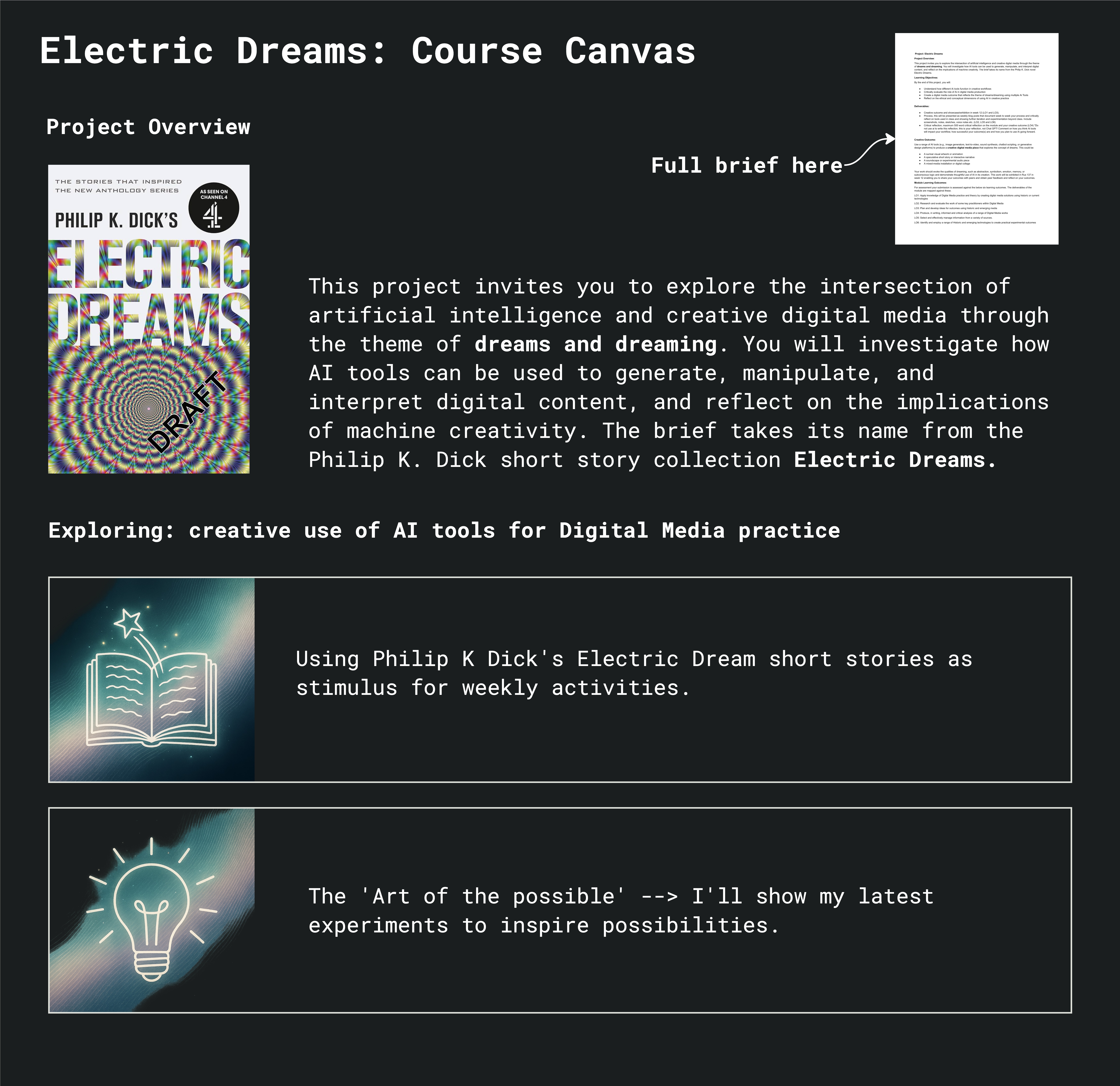

The course follows a three-tier model: Learn about AI → Create with AI → Experience AI. Each week pairs a Philip K. Dick concept with an AI capability, progressing through text generation, image generation, audio, video, and agentic AI. Students complete quest-based challenges combining multiple tools with themed scenarios, following a consistent spine: research → structured prompts → multimodal build → ethics → reflection.
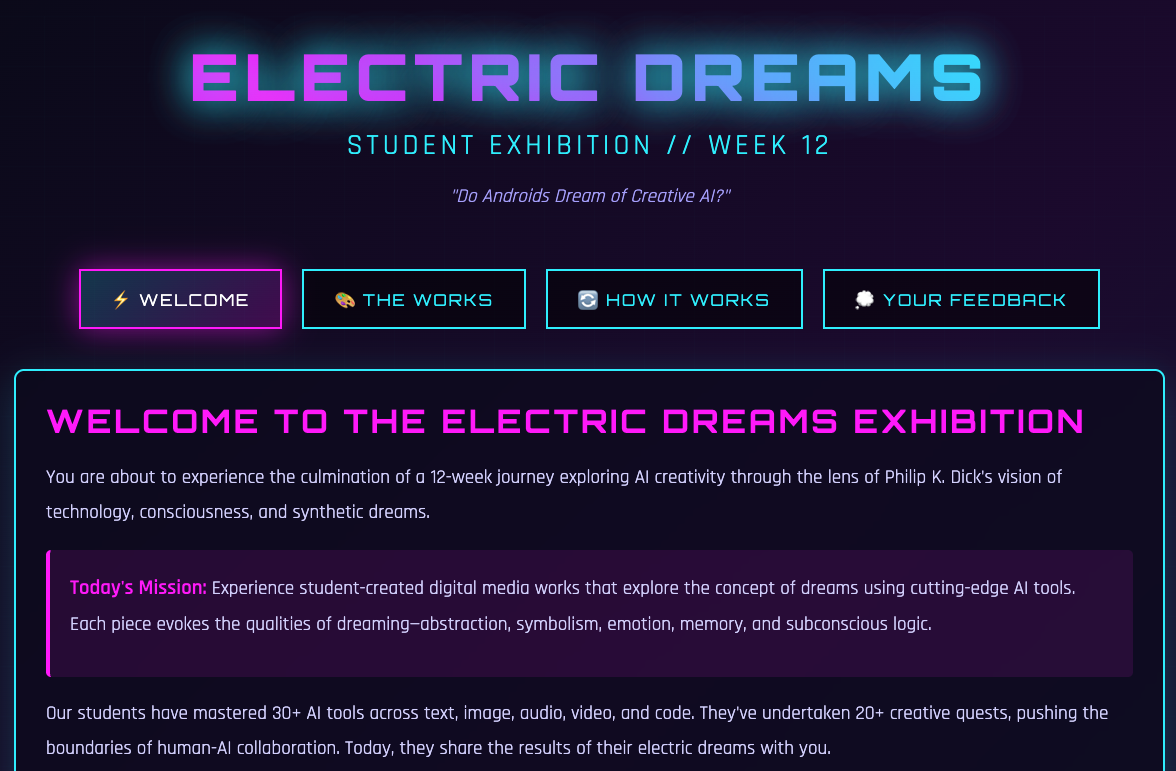
Assessment is through weekly process blogs rather than final essays, encouraging genuine experimentation and honest documentation of what worked and what didn't. The course culminates in a salon-style exhibition where students present AI-powered creative works across five formats: video and animation, interactive narratives, audio and soundscapes, visual artworks, and generative code.
Key Innovations
Quest-Based Learning
Themed creative challenges inspired by Philip K. Dick scenarios. Each quest follows a consistent framework: research, structured prompting, multimodal creation, ethical consideration, and reflection. Students build mini portfolio pieces while developing critical frameworks for evaluating AI output.

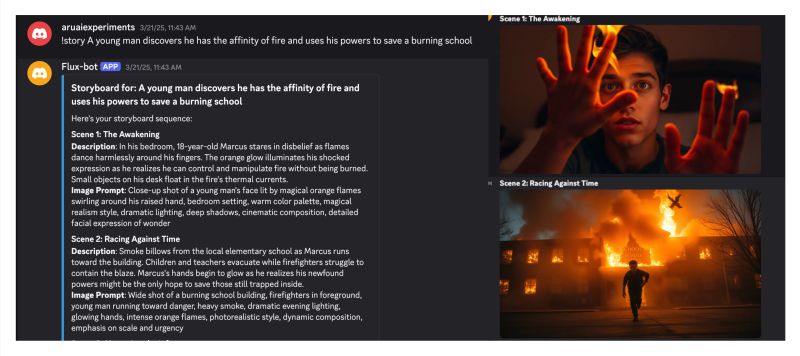
The Discord Bot
A custom-built bot using Replicate API as the backend, giving the entire class hands-on access to Flux Schnell, Flux Pro, Recraft, Minimax and Kling through simple chat commands. Solved the access and budget problem while creating a visible, collaborative creative studio where everyone could see and learn from each other's work.
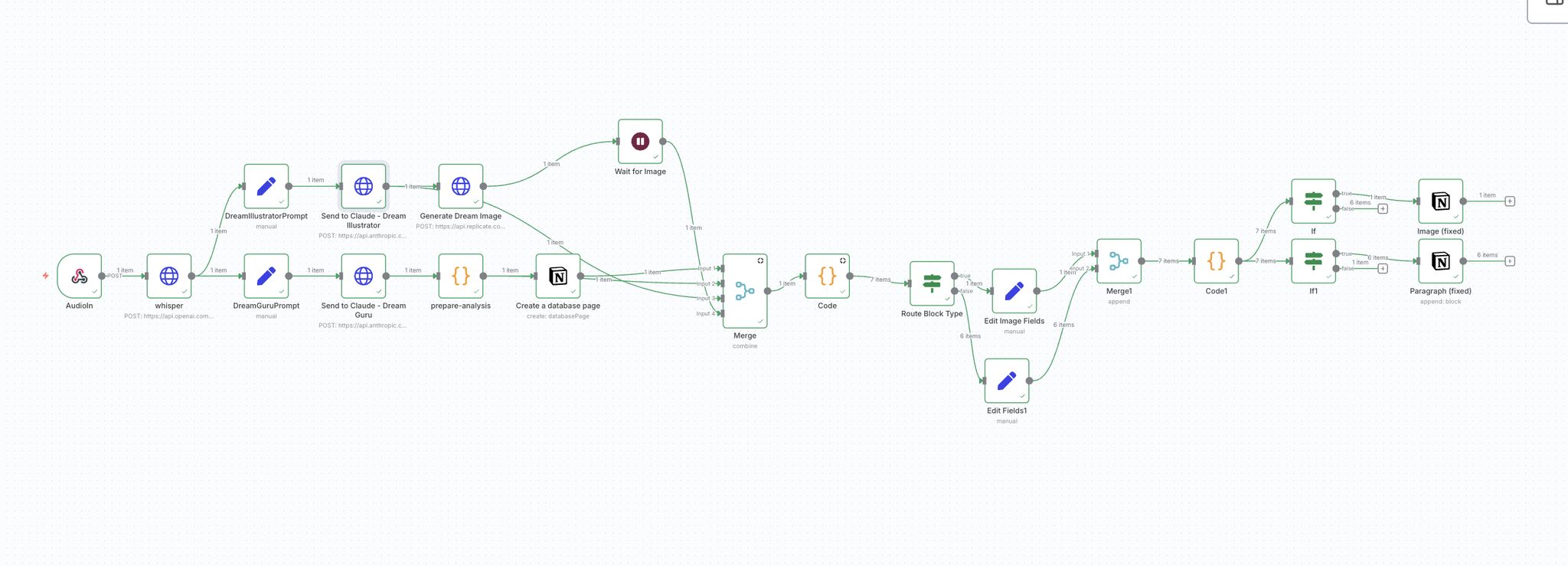
The Dream App
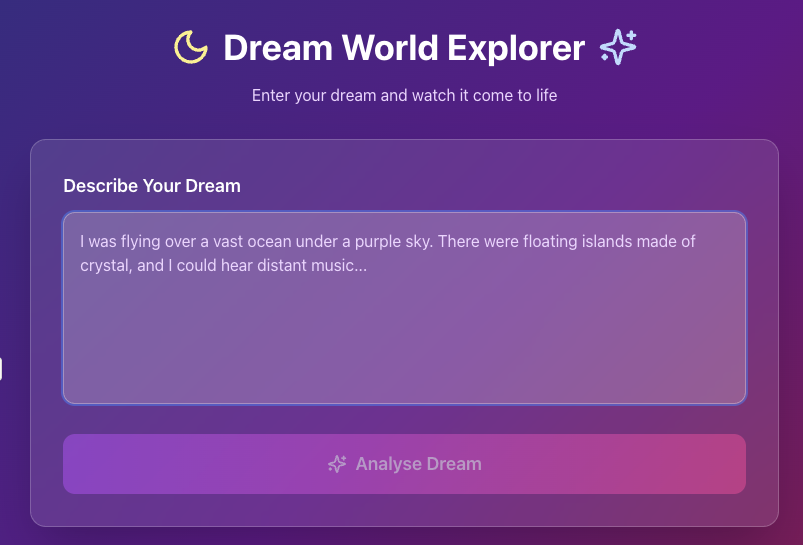
An n8n workflow chaining audio transcription, LLM-based dream analysis, image generation and data storage into a single pipeline. Bridges subjective human experience with AI's hallucinatory qualities — an example of the interdisciplinary thinking these tools make possible.
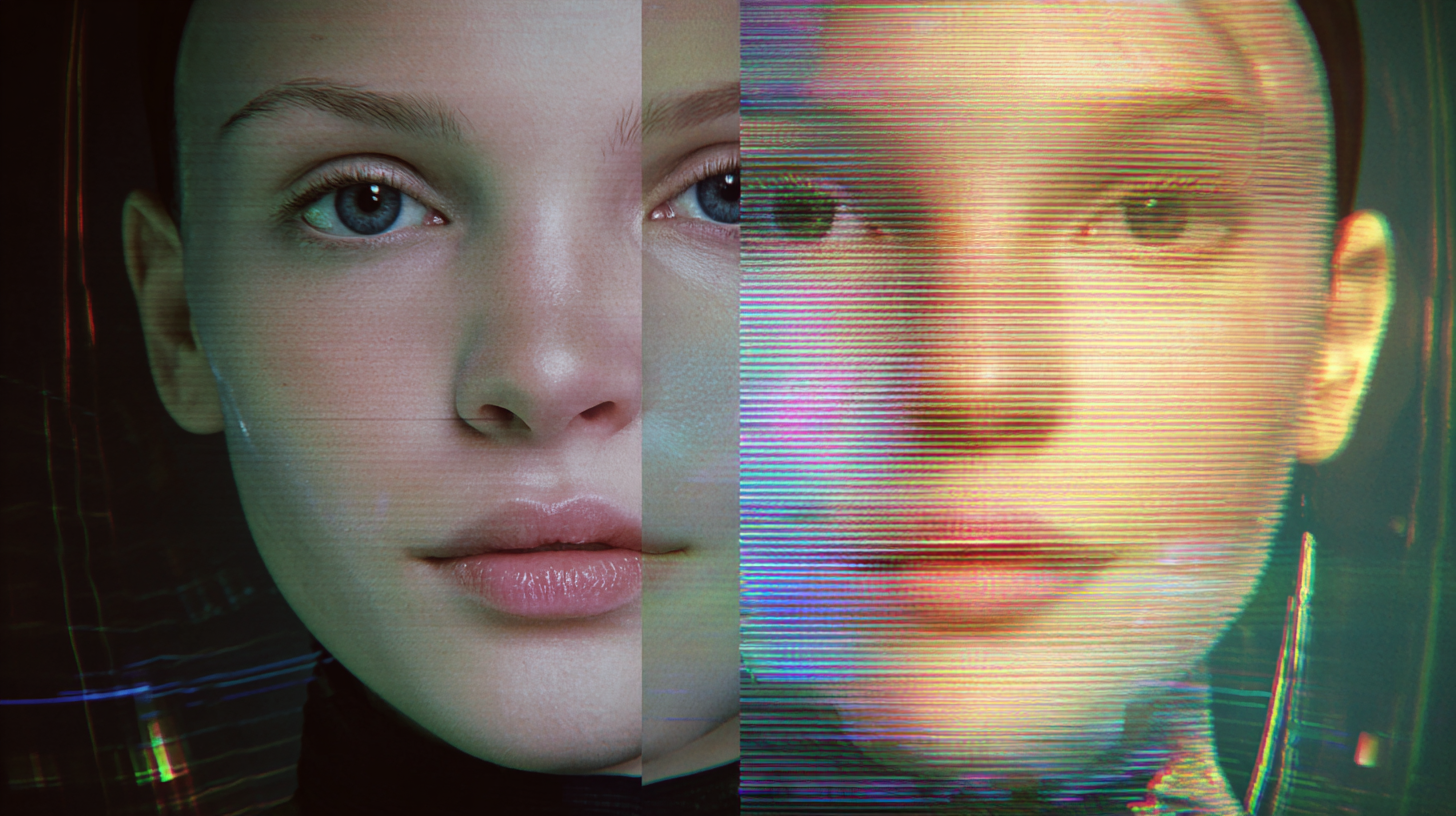
AI Co-Teachers
Three AI personas with distinct pedagogical roles — The Specialist for technical context, The Thinker for critical reflection, The Motivator for encouragement and pacing. Students experienced human-AI collaboration as part of the teaching delivery itself.
Meta-Learning
Used AI to design the course about AI. Teaching materials, visual content, assessments and in-class demonstrations were all developed collaboratively with AI tools — showing students the process in action rather than describing it.
Impact
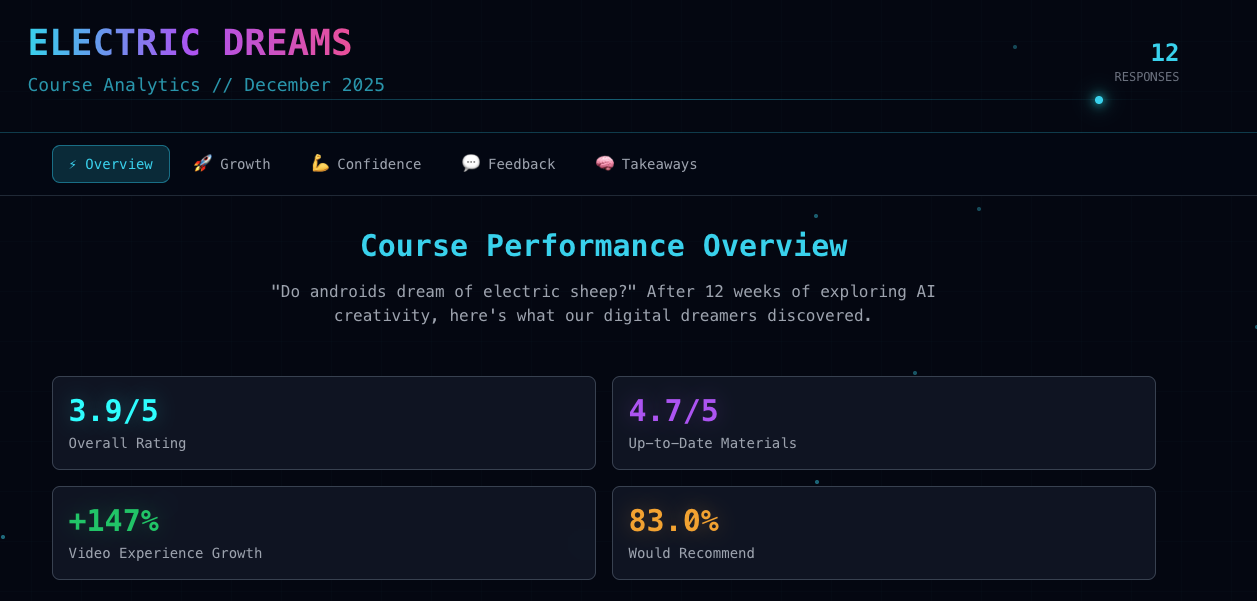
"The presentation style and materials were both first class" — Electric Dreams student, 2025
The Exhibition
The course culminated in a salon-style showcase in Week 12. Students presented as artist-practitioners at individual stations, with guests and peers rotating through in small groups. The format was conversational rather than presentational — each student had their work running at their station alongside a printed artist card explaining their dream concept, AI tools used, and creative process.